

Flowery Branch Landscape Services
Sign up now for autumn service and let your yard shine with vibrant fall colors and expert care.
Get a Free QuoteLandscape Services Tailored for Flowery Branch, Georgia
Expert Lawn Care for Flowery Branch Homes
Flowery Branch’s unique blend of rolling hills, mature tree canopies, and proximity to Lake Lanier creates distinct landscaping challenges for homeowners. In neighborhoods like Sterling on the Lake and along the shores of Hideaway Bay, lawns often contend with shaded lots that limit grass growth, as well as sloped terrain prone to soil erosion during heavy spring rains. Summer droughts can stress turf, while winter road treatments may introduce salt exposure near main thoroughfares such as Atlanta Highway. Our services are designed with these local factors in mind, ensuring your property thrives year-round. For more information about the city’s parks, community events, and local resources, visit the official Flowery Branch website.
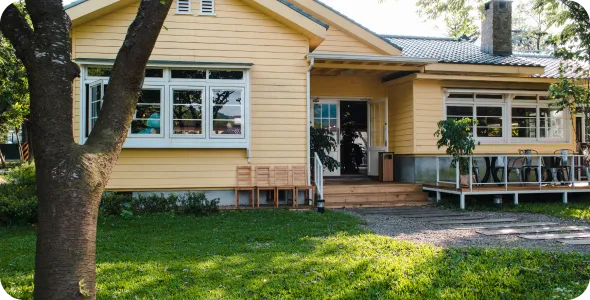
Our Flowery Branch Landscaping & Yard Care Services
Flowery Branch Gardening Services
Flowery Branch Yard Clean Up
Why Choose Flowery Branch Landscape Services

Flowery Branch Homeowners Trust Us

Comprehensive Lawn Maintenance
-
Reliable Scheduling
-
Experienced Local Team
-
Competitive Pricing
-
Satisfaction Guarantee
-
Personalized Service Plans
-
Eco-Friendly Solutions
Contact Your Local Flowery Branch Public Works or Solid Waste Department for Green Waste Info
Flowery Branch residents should coordinate yard waste disposal through the city and Hall County services. Green waste—including grass clippings, leaves, branches, hedge trimmings, and pine straw debris—must be bundled or placed in approved containers for curbside collection. Branches should typically be cut to lengths no longer than four feet and bundled securely. Plastic bags are discouraged; paper yard waste bags or open containers are preferred. Hall County operates convenience centers where residents can drop off brush and organic debris with proof of residency. Commercial landscapers must use separate approved disposal facilities and may be subject to additional fees. Storm debris collection is coordinated on an as-needed basis following severe weather. Critically, blowing or dumping clippings, leaves, sediment, or fertilizer granules into streets, gutters, storm drains, ditches, or streams is prohibited under the Clean Water Act and local MS4 stormwater programs. Grasscycling—leaving finely mulched clippings on the lawn—reduces waste volume and returns nutrients to the soil.
Flowery Branch Public Works Department
5500 West Price Road, Flowery Branch, GA 30542
Phone: (770) 967-6371
Official Website: Flowery Branch Public Works Department
Hall County Solid Waste Department
2875 Browns Bridge Road, Gainesville, GA 30504
Phone: (770) 531-6800
Official Website: Hall County Solid Waste Department
Lawn Care Regulations & Permits in Flowery Branch, GA
All commercial pesticide applicators working in Flowery Branch must hold valid licenses under the Georgia Pesticide Use and Application Act of 1976 and the Georgia Pesticide Control Act of 1976, administered through Georgia Department of Agriculture - Licensing. Homeowners can verify credentials via Georgia Department of Agriculture - Search for Pesticide Applicators. Fertilizer products sold and distributed in Georgia are regulated under the Georgia Fertilizer Act of 1997, though local stormwater ordinances, HOA rules, and watershed programs may further influence application timing and runoff prevention. Outdoor watering must comply with statewide conservation rules outlined by Georgia Water Conservation, including odd/even watering schedules and time-of-day restrictions. Drought response stages may impose additional limits. Commercial lawn care operators must obtain an occupation tax certificate from the City of Flowery Branch, carry liability insurance, and comply with local noise ordinances governing equipment operation hours—typically restricting motorized equipment before 7:00 a.m. and after 9:00 p.m. on weekdays, with more limited weekend hours.
Georgia Department of Agriculture
19 Martin Luther King Jr. Drive SW, Atlanta, GA 30334
Phone: (404) 656-3600
Official Website: Georgia Department of Agriculture
Flowery Branch Development Services Department
5500 West Price Road, Flowery Branch, GA 30542
Phone: (770) 967-6371
Official Website: Flowery Branch Development Services Department
What Neighborhoods Do We Serve in Flowery Branch, GA?
Flowery Branch sits in Hall County along the southern shore of Lake Lanier, placing it in the North Georgia / Foothills / Mountain Fringe region—a transition zone where Piedmont red clay meets the rocky clay-loam soils of the foothills. This creates distinct lawn care challenges across neighborhoods:
- Sterling on the Lake — A large master-planned community with HOA-maintained common areas, sloped lots, and a mix of bermudagrass in sunny areas and tall fescue in shaded settings. Stormwater ponds and stream buffers require careful fertilizer and runoff management.
- Reunion Country Club — Upscale properties with zoysiagrass and bermudagrass on golf-course-adjacent lots. Mature hardwood canopy creates shade stress, and clay-loam soils demand regular aeration.
- Oakbrook / Oakbrook Subdivision — Established homes on moderate slopes with compacted clay soils, pine straw accumulation, and tall fescue lawns prone to summer decline.
- Chattahoochee at Lake Lanier — Lakefront and near-lake properties where erosion control, slope stabilization, and watershed-sensitive fertilizer practices are critical due to proximity to Lake Lanier.
- Flowery Branch Historic Downtown — Older lots near Main Street with mature tree canopy, shallow root competition, and mixed sun/shade conditions requiring careful turf species selection.
- Spout Springs Road Corridor — Newer suburban developments on graded fill soils with compaction issues, limited topsoil depth, and bermudagrass or zoysiagrass installations needing establishment care.
- Lights Ferry Road Area — Rural-transitional properties with wooded lots, rocky clay-loam soils, steep grades, and erosion risk during heavy rain events.
Partnering With Flowery Branch's Stormwater, Environmental, or Sustainability Office
Flowery Branch and Hall County coordinate stormwater management under Georgia's MS4 program, aligning with Georgia EPD - Municipal Stormwater and Georgia EPD - Stormwater requirements. Lake Lanier's watershed sensitivity makes responsible lawn care essential. Sustainable landscaping practices include:
- Proper mulching around trees and beds to reduce erosion on slopes
- Grasscycling to return nutrients and reduce green waste
- Compost topdressing to improve clay-soil infiltration
- Rain gardens in low spots to capture and filter runoff
- Native plant integration along stream buffers and drainage corridors
- Erosion-aware planting on hillside lots common throughout the foothills
Compliance with Georgia Soil and Water Conservation Commission - Urban Erosion & Sediment Control standards is required for any land-disturbing activity. Coordination with local watershed cleanup events, stream adoption programs, and Hall County extension outreach strengthens community environmental stewardship.
Georgia Environmental Protection Division
2 Martin Luther King Jr. Drive SE, Suite 1456 East, Atlanta, GA 30334
Phone: (404) 656-4713
Official Website: Georgia Environmental Protection Division
Hall County Stormwater Management
2875 Browns Bridge Road, Gainesville, GA 30504
Phone: (770) 531-6800
Official Website: Hall County Stormwater Management
Top Flowery Branch Lawn Problems (and How We Solve Them)
Flowery Branch's foothills location and clay-heavy soils create specific turf challenges:
- Clay compaction and poor infiltration — Heavy foot traffic and builder-grade fill compact clay-loam soils, restricting root growth. Core aeration in fall for fescue or late spring for bermudagrass restores air and water movement. Soil testing through UGA Lawn Care & Landscaping guides amendment strategies.
- Tall fescue summer decline — Fescue is popular in shaded North Georgia landscapes but suffers during hot, humid summers. Raising mowing height to 3.5–4 inches, irrigating deeply but infrequently, and overseeding each fall with improved cultivars sustains density.
- Erosion and slope washouts — Sloped lots near Lake Lanier and along creek corridors experience soil loss during heavy thunderstorms. Terracing, erosion-control blankets, and deep-rooted ground covers stabilize grades.
- Brown patch in tall fescue — Warm, humid nights trigger Rhizoctonia outbreaks. Avoiding late-summer nitrogen, improving air circulation, and applying preventive fungicides per UGA Turfgrass recommendations reduce severity.
- Shade thinning and tree-root competition — Mature hardwoods and pines create dense shade. Selective limb-raising, shade-tolerant fescue blends or zoysiagrass conversion, and adjusted fertilization improve turf persistence.
- Armyworm and sod webworm damage — Late-summer caterpillar infestations can devastate bermudagrass and fescue. Integrated pest management with threshold-based treatment minimizes chemical use. Refer to UGA Invasive Species for identification resources.
- Spring dead spot in bermudagrass — Circular dead patches appear as bermudagrass breaks dormancy. Reducing fall nitrogen, aerating, and improving drainage address the root cause.
What Makes Lawns in Flowery Branch Different From the Rest of Georgia?
Flowery Branch occupies a unique position in Georgia's landscape—sitting at the southern edge of the North Georgia foothills while sharing characteristics with the upper Piedmont. This transition creates conditions unlike those found in Middle Georgia, South Georgia, or the coast:
- USDA Hardiness Zone 8a with cooler winters than most of Georgia south of Gainesville, bringing occasional hard freezes and longer dormancy for warm-season grasses
- Rocky clay-loam and red clay soils with variable depth to bedrock on hillside lots, unlike the sandy Coastal Plain soils of South Georgia or the flat marsh-adjacent soils of Savannah
- Elevation around 1,100–1,200 feet producing cooler nighttime temperatures that favor tall fescue more than in warmer Georgia regions
- Lake Lanier watershed sensitivity requiring stricter nutrient and sediment runoff management than inland areas without major reservoir proximity
- Heavy hardwood and pine canopy creating more shade stress than open suburban developments in Middle or South Georgia
- Shorter warm-season growing window compared to Valdosta or Brunswick, affecting bermudagrass green-up timing and fertilization schedules
- Greater frost risk and freeze-thaw soil movement than Piedmont suburbs closer to Atlanta's urban heat island
Supporting Local Events in Flowery Branch With Lawn Expertise
Professional lawn care supports Flowery Branch's community life through:
- Preparing athletic fields and park grounds for youth sports leagues and school events
- Maintaining turf areas for the Flowery Branch Fall Festival and downtown gatherings along Main Street
- Supporting Flowery Branch Parks & Recreation with seasonal field renovation, aeration, and overseeding
- Assisting with greenway and trail corridor maintenance along creek buffers
- Coordinating storm cleanup after severe thunderstorms, including fallen limb removal, slope repair, and turf restoration
- Supporting Lake Lanier shoreline and park area cleanup events
- Partnering with school campuses for safe, well-maintained outdoor spaces
Flowery Branch Parks & Recreation Department
5500 West Price Road, Flowery Branch, GA 30542
Phone: (770) 967-6371
Official Website: Flowery Branch Parks & Recreation Department
Eco-Friendly Landscaping Backed by Flowery Branch's Water-Saving and Green Initiatives
Aligning with statewide water conservation goals and Lake Lanier watershed protection, responsible lawn care in Flowery Branch emphasizes:
- Smart irrigation practices:
- WiFi-enabled smart controllers adjusting to rainfall and soil moisture
- Watering only during approved hours per Georgia Water Conservation guidelines
- Zone calibration to prevent overwatering on clay soils
- Drought-tolerant bermudagrass or zoysiagrass selection for sunny areas
- Reduced-chemical approaches:
- Compost topdressing to build organic matter in clay soils
- Integrated pest management with threshold-based treatment
- Proper fertilizer timing to prevent nutrient runoff into Lake Lanier tributaries
- Pollinator-friendly beds and native plant borders
- Carbon footprint reduction:
- Battery-powered mowers and blowers for residential service
- Route efficiency to reduce fuel consumption and idling
- Local mulch reuse from brush recycling programs
- Grasscycling to eliminate unnecessary green waste hauling
Flowery Branch Utilities Department
5500 West Price Road, Flowery Branch, GA 30542
Phone: (770) 967-6371
Official Website: Flowery Branch Utilities Department
UGA Cooperative Extension — Hall County
818 Green Street, Gainesville, GA 30501
Phone: (770) 531-6988
Official Website: UGA Cooperative Extension — Hall County
National Weather Service — Peachtree City, GA
4 Falcon Drive, Peachtree City, GA 30269
Phone: (770) 486-1133
Official Website: National Weather Service Offices
U.S. Environmental Protection Agency, Region 4
61 Forsyth Street SW, Atlanta, GA 30303
Phone: (404) 562-9900
Official Website: U.S. Environmental Protection Agency, Region 4
Georgia Soil and Water Conservation Commission
4310 Lexington Road, Athens, GA 30605
Phone: (706) 552-4470
Official Website: Georgia Soil and Water Conservation Commission
Proudly Serving These Streets and Areas in Flowery Branch
Downtown / Central Flowery Branch:
- Main Street, Railroad Avenue, Mitchell Street, Atlanta Highway (US-23/GA-13), Phil Niekro Boulevard, Church Street, Gainesville Street
North / Lake Lanier Area:
- Lights Ferry Road, Gaines Ferry Road, Chattahoochee at Lake Lanier, Lake Lanier shoreline communities, Lanier Islands Parkway corridor
East / Spout Springs Corridor:
- Spout Springs Road, Hog Mountain Road, Falcon Parkway area, Sterling on the Lake, Oakbrook subdivision
South / West Corridors:
- McEver Road, Thurmon Tanner Parkway, Reunion Country Club, Mulberry Creek, Snelling Avenue area
Notable Landmarks & Special Consideration Areas:
- Flowery Branch Town Park, Falcon Stadium (Atlanta Falcons Training Facility), Flowery Branch Elementary and C.W. Davis Middle School campuses, Lake Lanier stream buffers and stormwater ponds, Veterans Memorial Park
- HOA-governed communities including Sterling on the Lake and Reunion require compliance with architectural and landscape standards
- Properties adjacent to Lake Lanier tributaries must observe stream-buffer setbacks and fertilizer-free zones
- Wooded lots along Lights Ferry Road and Gaines Ferry Road require slope-stabilization and erosion-control awareness per USDA Web Soil Survey soil data